Educational AI & research tools

Better tools.
Deeper thinking.

Find AI tools for research, writing and study.
Know what to trust, what to check, and what to do next.

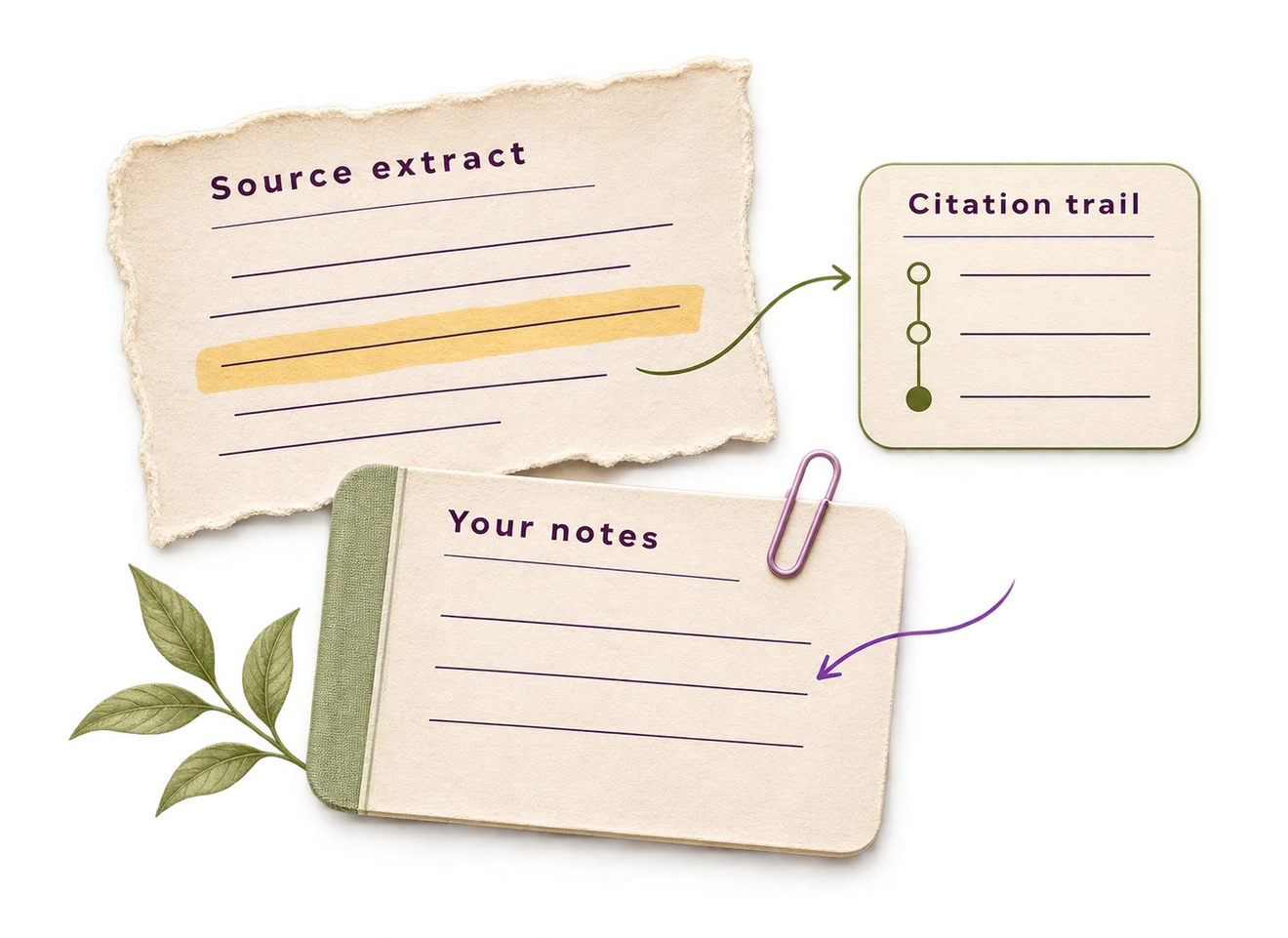
A source extract, reading notebook and citation trail connected by annotations

Choose your next step

ResearchFind, read and verify reliable sources for your topic.WritePlan, draft and refine with the right support.StudyTurn your materials into questions, notes and practice.

Current directory

21 tools for academic work

We compare role, fit, limitations, and a safer workflow. Product facts link to first-party documentation.

CG

Guided study, planning & essay feedback

ChatGPT

ChatGPT is a flexible discussion partner when you define the learning task and keep the source checks and final argument under your control.

Best for
Discussing a difficult concept, testing an outline and identifying gaps in your own argument
Read the profile
CL

Long-reading critique & essay feedback

Claude

Claude is worth evaluating as a document-centered critic when you want questions about your reasoning before you revise your own essay.

Best for
Discussing assigned readings, challenging a thesis and turning feedback into a revision plan
Read the profile
GE

Research planning & Google Docs revision

Gemini

Gemini is worth considering when you already work in Google Docs and Drive, provided you distinguish discovery, source checking and revision.

Best for
Planning research, questioning an argument and revising a draft within a Google-based workflow
Read the profile
GR

Essay feedback, editing & attribution

Grammarly

Grammarly is a practical editing candidate when you need explainable feedback on a draft; separate language fixes, rubric comments and source checks.

Best for
Reviewing grammar, clarity and assignment feedback while preserving your own argument
Read the profile
QB

Grammar, paraphrasing & citation utilities

QuillBot

QuillBot is useful to evaluate as a collection of focused editing utilities; choose the check your draft actually needs and review its suggestions.

Best for
Reviewing a self-written draft for sentence-level clarity and formatting references
Read the profile
JE

Academic drafting & citations

Jenni AI

Jenni is worth considering when the difficult handoff is from organized readings to a cited draft; the writer still has to control the argument and verify the evidence.

Best for
Drafting a source-based paper while keeping a selected research library beside the text
Read the profile

See all tools and comparison table

The durable workflow

Four handoffs. One accountable writer.

AI is most reliable when each tool has a narrow job and every factual handoff is checked by a person.

  1. 1
    Frame

    Interpret the assignment and form your own provisional claim.

  2. 2
    Find

    Locate original sources in scholarly databases or research tools.

  3. 3
    Write

    Draft from verified notes, keeping citations attached to ideas.

  4. 4
    Audit

    Check meaning, evidence, attribution, policy, and disclosure.

Writing workspaces

More tools to explore

Explore more writing workspaces and compare their documented strengths, limits and practical uses.

Practical guides

Build a process you can defend

All guides →

Writing field notes

Questions writers actually ask

Practical methods for developing an argument, using sources and checking what you submit.

Our standard

We do not call a product “tested” unless we tested it.

These new profiles are source-based product guides, not hands-on reviews. Every article and review is maintained as current guidance with sources and revision dates. That distinction is central to our methodology.