 AI Essay

On this page
Free, local IEEE number check
Match IEEE citations with numbered references
Paste citation-bearing text in reading order and the numbered reference entries. Review missing, unused, duplicate and out-of-order numbers before editing your source document.
Recognizes bracketed numbers such as [1], [2] and locator forms such as [3, Sec. 4.5]. Order is checked within pasted text only; an excerpt cannot establish whole-manuscript order.
Keep the reference number at the start of each entry. Indented continuation lines are joined to the preceding entry.
Your text stays in this browser tab. It is not uploaded or saved. This does not validate IEEE reference formatting, source identity or claim support.
Number match report
View the IEEE number-check workflow
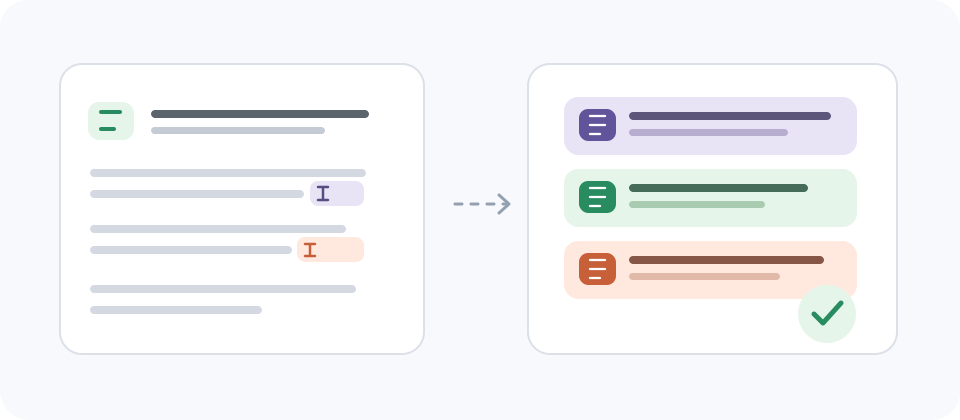
Compare IEEE citation numbers with the reference list
IEEE uses numbered references. In the current IEEE Reference Guide, in-text reference numbers appear in square brackets inside the punctuation; each number points to one reference-list entry. The checker compares bracketed numbers it can recognize in your pasted text with reference entries that begin with a bracketed number.
In the standard numbered IEEE workflow, the first source cited receives [1], later sources are numbered in order of first citation, and repeat citations keep their original number. The checker reports cited numbers with no parsed entry, numbered entries not found in parsed text, repeated reference numbers, gaps in the list, and whether first appearances run in ascending order. A bracketed locator such as [3, Sec. 4.5] is treated as a citation to reference 3. For matching, ascending ranges of up to 100 numbers are expanded so references within the range are not mistaken for unused entries; each range is still flagged because the IEEE Reference Guide writes every number explicitly. Descending or larger ranges are not expanded and need manual checking. A constructed sample is available so you can inspect the result before using your own text.
Run the IEEE number check
Paste the citation-bearing manuscript text in reading order, including the abstract, body, captions and notes where they contain citations, plus the numbered reference entries. Put each reference on its own line and keep the leading [number]. Wrapped continuation lines may be indented beneath their numbered entry. Choose “Check citation numbers,” then compare every finding with the original manuscript and the source records. If you paste only an excerpt, first-citation order is assessed only within that excerpt.
The report is a consistency aid, not a citation generator or automatic renumbering tool. IEEE warns that editing references can require careful changes to both citations and reference entries, and recommends checking with the author when renumbering. Make changes in your word processor only after reviewing all affected references.
Understand what the checker does not verify
This tool does not assess reference punctuation, author initials, title capitalization, journal abbreviations, DOI or URL validity, source existence, or whether a source supports a claim. It may not recognize citations or entries outside the described plain-text patterns. First-citation order can be assessed only within the text you paste; a partial excerpt cannot establish the order across a whole manuscript. A clean report means only that the parsed numbers appear to match; it does not certify IEEE style or a submission-ready paper.
The comparison runs in your browser tab. Your pasted text is not uploaded or saved by this checker. Clear both fields when you finish, particularly on a shared device. For reference formatting, IEEE provides its own Reference Preparation Assistant and Reference Guide. Publication templates can differ by journal and conference, so check the instructions for the venue or course you actually need.
Use a repeatable final check
Confirm the required IEEE guide or venue instructions, compare the number sequence in the manuscript with the reference list, resolve every flagged case in the original file, and then inspect the full formatted references against the sources you used. If you revise the order, recheck every citation after the change rather than assuming the list and manuscript stayed synchronized.
For other citation systems, see the site’s <a href="/guides/citation-formatting-workflow">citation formatting workflow</a>, including its APA 7, MLA 9, Chicago and Leeds Harvard tools. The <a href="/guides/doi-metadata-lookup">DOI metadata lookup</a> can help locate deposited metadata; compare those fields with the publisher or source record.
Questions about this topic
What does this IEEE citation checker look for?
It compares parsed bracket-number citations in the pasted text with references that begin with a bracketed number. Ascending ranges of up to 100 numbers count toward reference matching and first-citation order, but the tool still flags them because IEEE writes each number explicitly. Descending or larger ranges need manual review. The checker can also flag missing, unused, repeated or out-of-order numbers. First-citation order is assessed only within the text you paste, so a partial excerpt cannot establish the order across the whole manuscript.
Does IEEE use ranges such as [1]–[4]?
The IEEE Reference Guide writes sequential citations as separate bracketed numbers, for example [1], [2], [3], rather than a dash range. This checker expands a bounded ascending range only for number matching; it flags the range as a style issue, and you should confirm its format against the current guide and your publication venue.
Does it automatically renumber my IEEE citations?
No. Review findings and make any changes in your source document yourself. Renumbering can affect every citation and reference entry, so check all affected items.
Does a clean result prove my references follow IEEE style?
No. It checks a limited number-matching subset. It does not verify reference formatting, source identity, DOI validity or whether the source supports the cited claim.
Is my paper uploaded?
No. The comparison runs in your browser tab and does not upload or save the pasted text. Clear the fields when finished, especially on a shared device.
Where can I format IEEE references?
IEEE’s Author Center links to its Reference Preparation Assistant and official Reference Guide. Check the instructions for the particular journal, conference or course because requirements can vary.
Sources and editorial notes
The supporting reading below informs our editorial guidance. Exercises and scenarios illustrate a method; they do not report a completed product test or measured learning outcome. Read our editorial policy or send a correction with a supporting source to info@ai-essay.com.