 AI Essay

On this page
Free browser-based tool
Compare your paraphrase with its source
Draft from what you understood, then reveal the source and review exact wording, meaning and attribution.
Private to this tab. Your text is compared in this browser and is not uploaded or saved.
Use only a passage you may handle on this device. Maximum 8,000 characters.
Step 1 · Draft without looking at the passage
Step 2 · Review the comparison
Exact wording to inspect
Matches are prompts, not a plagiarism finding. No match does not establish originality, accurate meaning or adequate citation.
Draft from the idea, then reveal the source
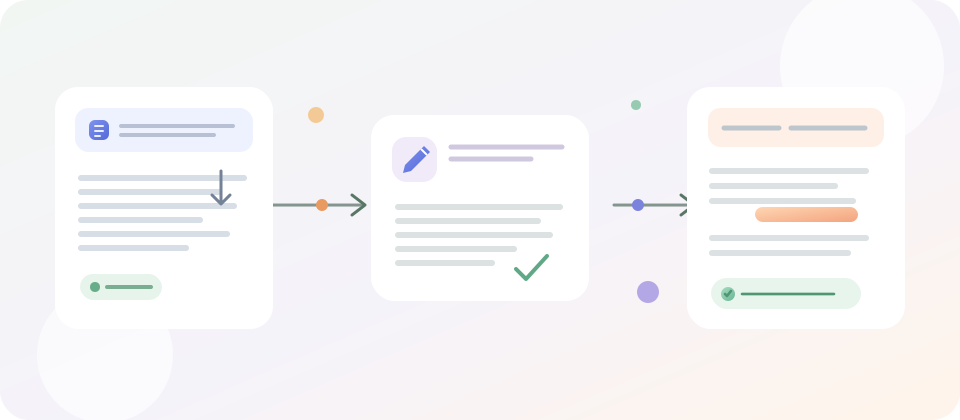
Paste a short passage you are permitted to use and record enough source information to find it again. Read until you understand the point and its qualifications. Hide the passage before drafting from memory in your own sentence structure. Reveal it only after you have a draft, then use the comparison as one prompt in a fuller review.
This sequence follows writing-center guidance to set the original aside while drafting, then compare the result for accuracy and distinctive borrowed wording. It gives you a chance to express the idea in the context of your argument instead of following the source sentence word by word.
What exact phrase matches can show
The checker highlights matching runs of six or more consecutive words after normalizing capitalization and punctuation. It does not calculate a similarity percentage. A match may be a necessary technical phrase, common wording or a quotation you intend to keep; inspect the surrounding sentence and your citation before changing anything.
No highlighted phrase does not prove that a paraphrase is original or accurate. The tool cannot recognize a borrowed idea expressed with different words, determine whether a phrase is common knowledge, or judge whether your citation meets an instructor’s rules.
Review meaning, wording and attribution
Compare the claim, not just its vocabulary. Check whether your sentence preserves the source’s population, conditions, time frame, uncertainty and direction. Look for a structure that still follows the source clause by clause. If you keep distinctive borrowed wording, quote it and cite it; cite a borrowed idea even when you have rewritten the sentence.
Add the in-text citation and reference details required by your course. Keep a page, section, paragraph or other locator when it will help you find a long source again. Purdue OWL and APA both treat paraphrasing as a writing-and-attribution task, not a synonym replacement.
Keep the comparison private to this tab
The source, draft and citation details are compared in this browser tab. The tool does not upload them, save them to browser storage, search the web, rewrite your sentence or evaluate a source. Clear the fields when you finish, especially on a shared device. Avoid entering confidential or identifying material unless your course and device rules allow it.
Questions about this topic
Does this paraphrase checker detect plagiarism?
No. It highlights exact wording runs of six or more consecutive words to prompt a closer review. It cannot judge idea borrowing, citation adequacy, source ownership, common knowledge or institutional policy.
Does a low or zero match mean my paraphrase is safe?
No. The tool does not provide a score or certify originality. Check whether you preserved the source’s meaning and limits, changed the sentence structure appropriately, and cited the borrowed idea.
Are my source and draft uploaded?
No. The comparison runs in this browser tab and the tool does not send or persist the text. Clear the fields before leaving a shared device.
Why does it flag wording I need to keep?
Exact overlap can be a technical term, a common phrase or wording you intend to quote. Review the context and follow your citation style and course rules; the match itself is not a judgment.
Can it rewrite my paragraph?
No. It does not generate or rewrite text. You decide how to express the idea and verify it against the source.
Sources and editorial notes
The supporting reading below informs our editorial guidance. Exercises and scenarios illustrate a method; they do not report a completed product test or measured learning outcome. Read our editorial policy or send a correction with a supporting source to info@ai-essay.com.